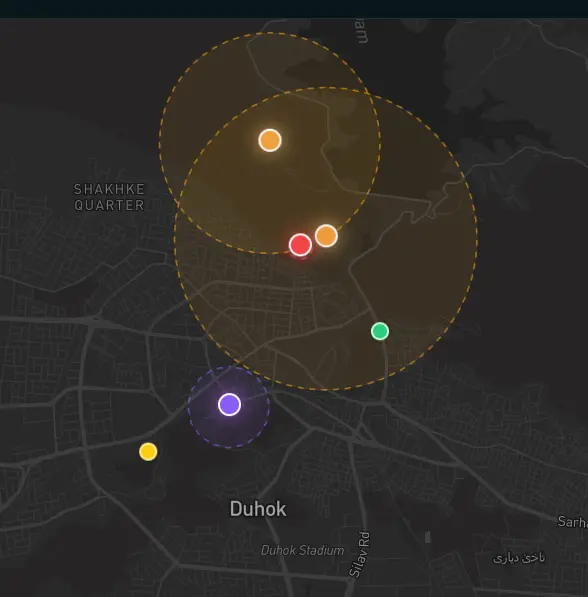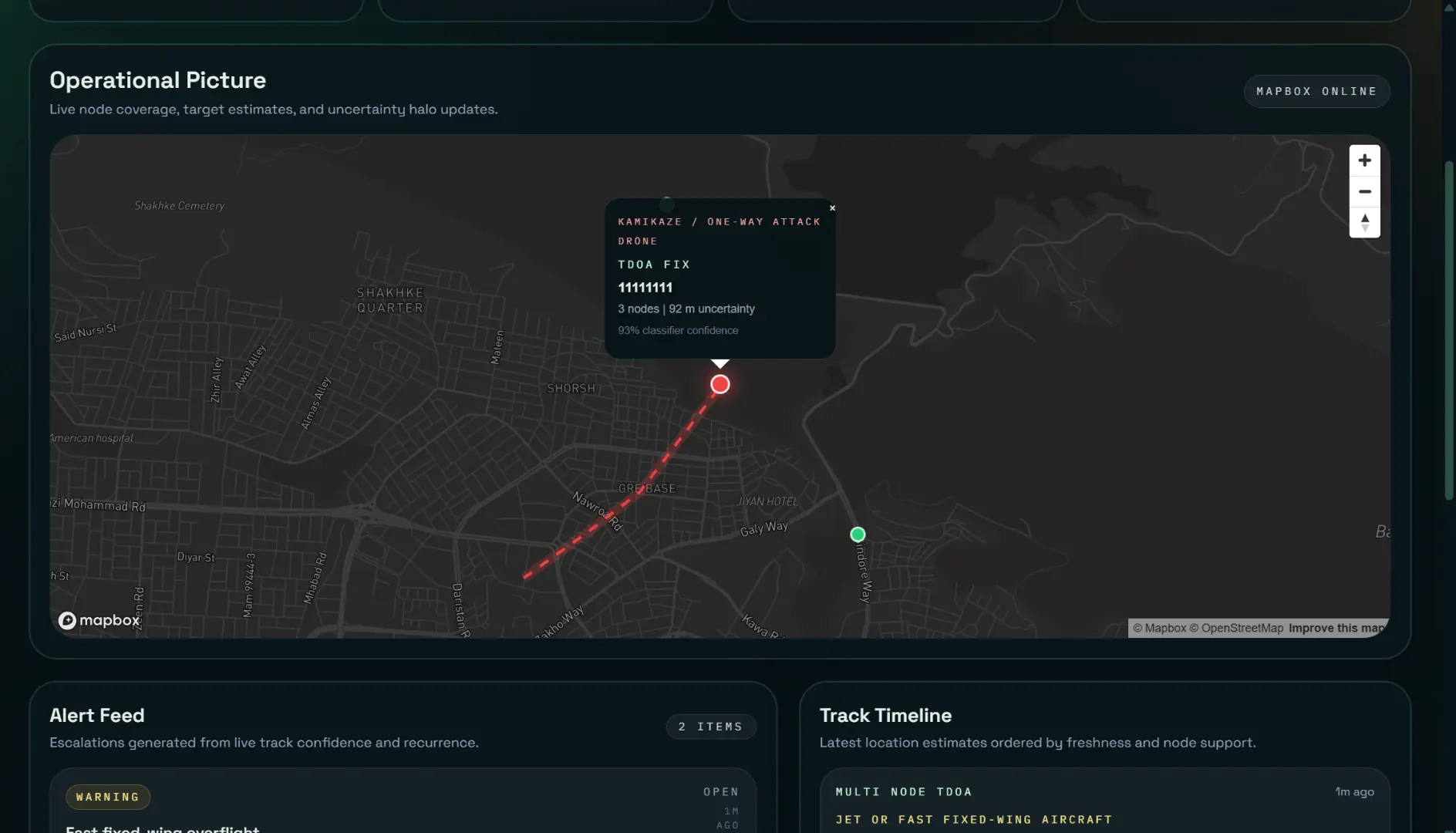
The Idea
This project started from a simple question:
Can you detect aircraft or drones without actively emitting any signals?
Instead of building something like radar (which requires transmitting signals), I wanted to explore a passive approach — using signals that already exist in the environment.
Things like:
FM radio towers
cellular signals
ambient sound
The idea was to observe how these signals change when something moves through them.
The Concept
The system is based on a passive detection model:
Signals are constantly being transmitted (radio, cellular, etc.)
When an object moves through them, it causes small disturbances
Those disturbances can potentially be detected and analyzed
At the same time, I added another layer:
using microphones to capture sound
applying basic classification to distinguish between:
drones
aircraft
background noise
So instead of relying on a single method, the idea was:
combine signal behavior + sound to improve detection
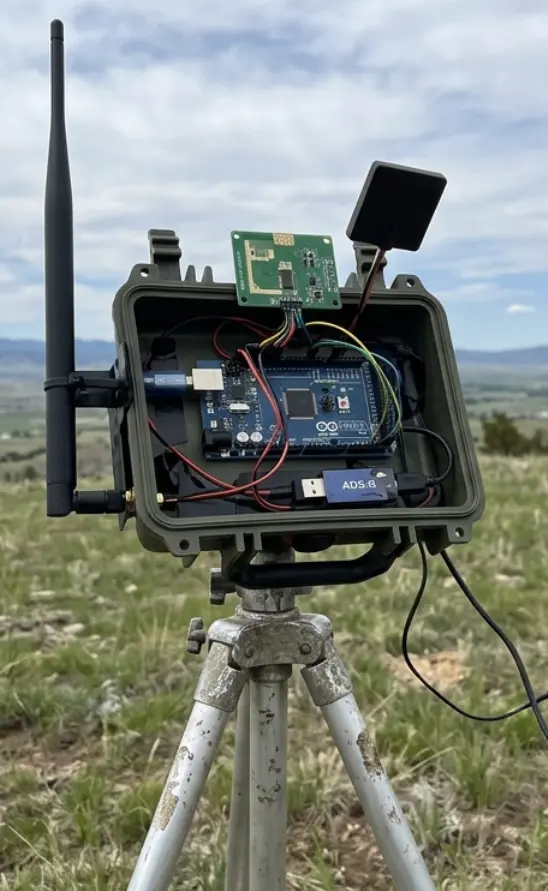
System Components
The concept involved:
RF signal observation (passive)
audio input (microphones)
a simple classification layer
basic logic to label detected objects
No transmission, no active scanning — just observation.
What I Focused On
This wasn’t about building a production system.
It was about understanding:
how signals behave in real environments
whether disturbances are noticeable
how audio can complement detection
how multiple weak signals can combine into something useful
Challenges
This is where things got interesting.
Signal noise is everywhere
Not every disturbance means something meaningful
Real-world environments are unpredictable
Audio classification is harder than expected
Also:
distinguishing a drone from background noise isn’t as clean as it sounds
What I Learned
This project pushed me outside normal web/app development.
A few key takeaways:
Real-world systems are messy
Data is rarely clean
Detection systems rely heavily on filtering and interpretation
Combining multiple signals is often more useful than relying on one
It also gave me a better understanding of:
signal-based thinking
system design beyond software interfaces
how hardware + software interact
Why I Built This
Living in a region where security and monitoring can matter, I was curious about:
how lightweight, passive systems could be used for awareness without heavy infrastructure
This wasn’t meant to be a final product.
It was an experiment to explore:
feasibility
concepts
and limitations
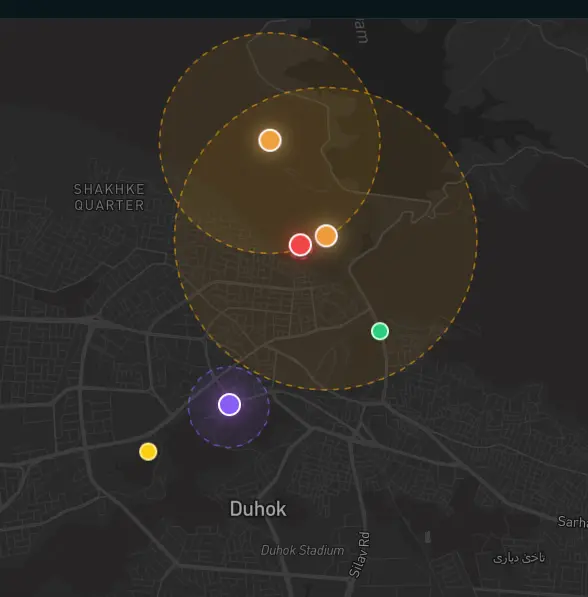
Current State
Right now, this exists as:
a prototype concept
an experimental approach
a learning project
Not production-ready, but valuable in terms of understanding how these systems could work.
Final Thoughts
This project made me realize something important:
building systems isn’t just about writing code — it’s about understanding the environment you’re working in
And sometimes the most interesting ideas come from:
combining simple signals
observing instead of controlling
and experimenting without clear answers