Building CueTill: A POS System for Local Businesses That Still Use Paper
Many small businesses still run their daily operations with paper, calculators, memory, and manual timers.
For cafés, lounges, billiard halls, and similar businesses, this creates a lot of problems. Tables need to be tracked, sessions need to be timed, items need to be added, receipts need to be printed, and owners need to know how much money was made at the end of the day.
That is why I started building CueTill.
CueTill is a modern POS and table management system designed around real business workflows. The goal was not just to make something that looks good, but to build something that can actually replace messy manual work inside a business.
The problem
A lot of local businesses do not need a complicated enterprise system. They need something simple, fast, and reliable.
The common problems are:
Tables are tracked manually
Orders are written on paper
Receipts are not always consistent
Reports are difficult to calculate
Owners do not always know what happened during a shift
Staff roles and access are not properly controlled
Businesses have no clean system for daily, weekly, or monthly sales tracking
For a business that handles many customers every day, these small issues become serious over time.
The solution
CueTill was built as a clean POS and management system that helps businesses run their operations from one place.
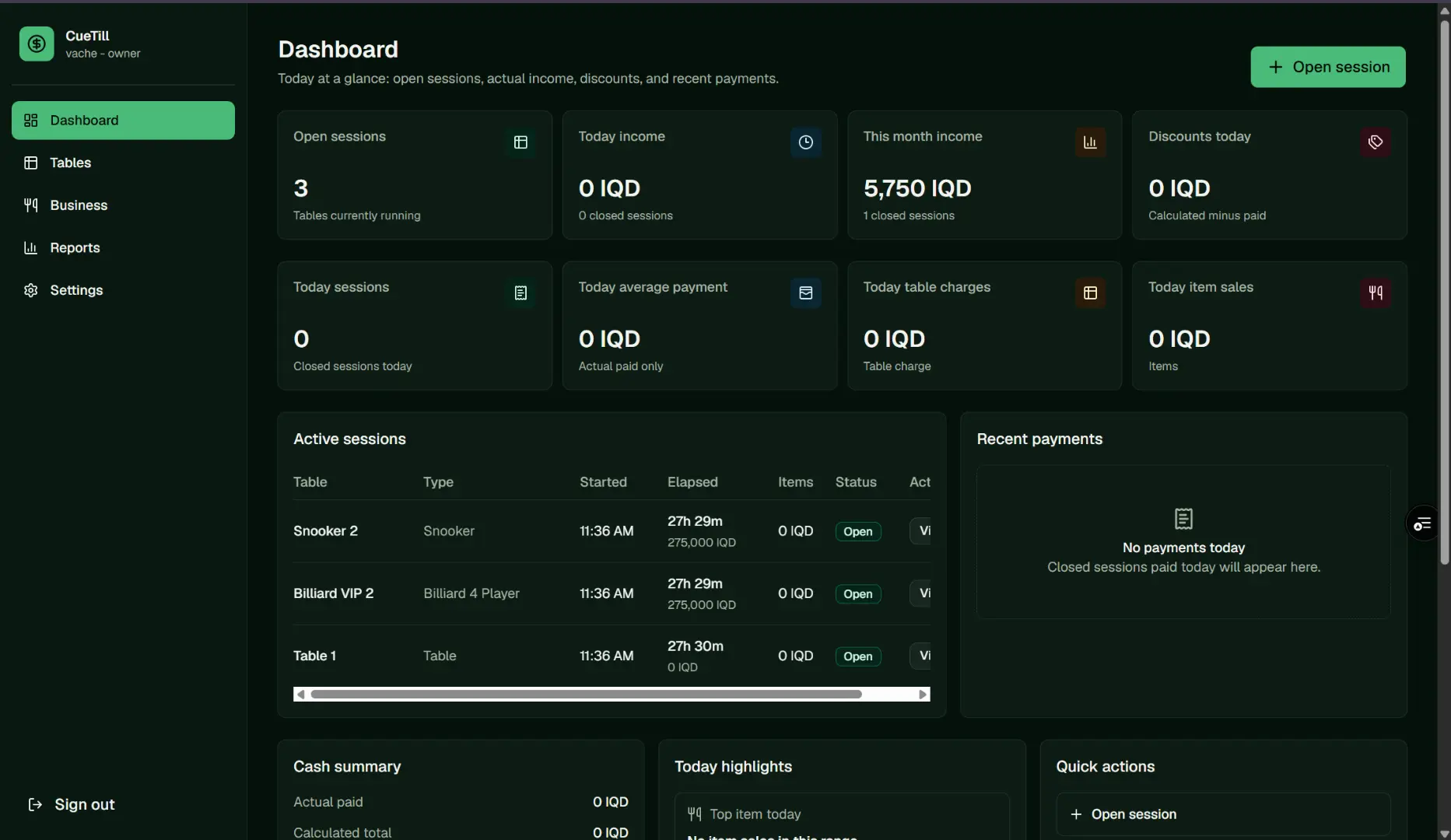
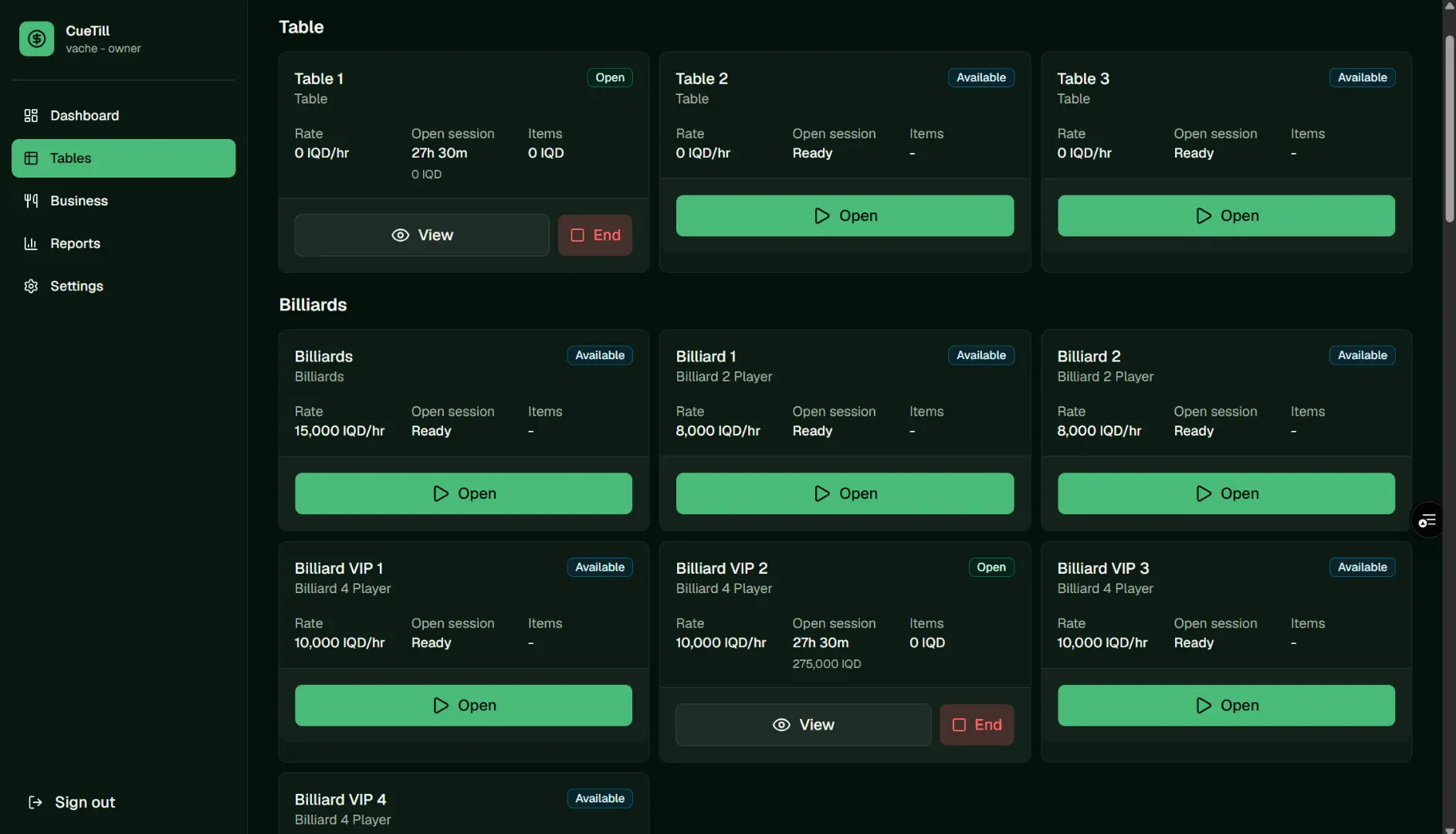
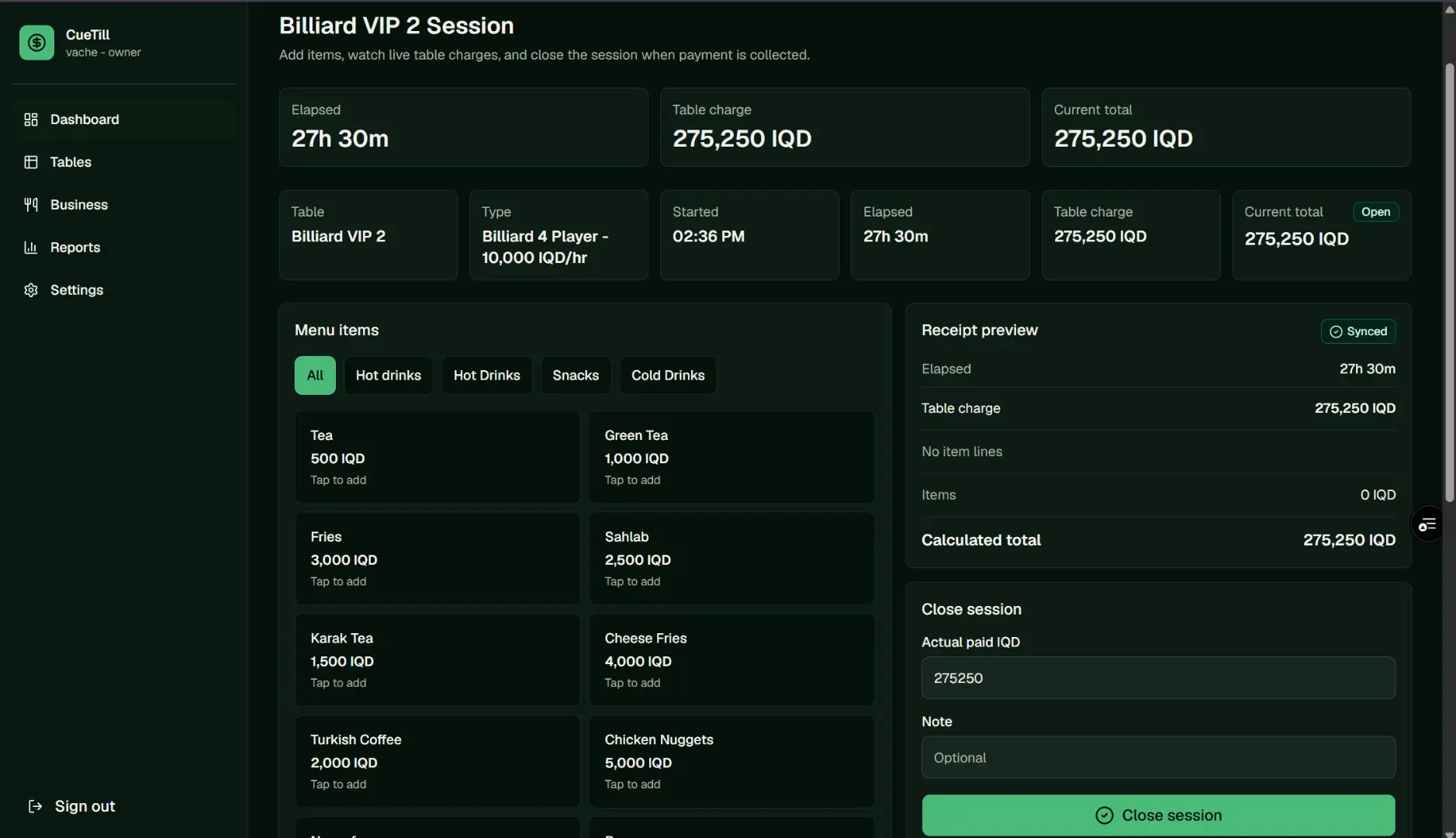
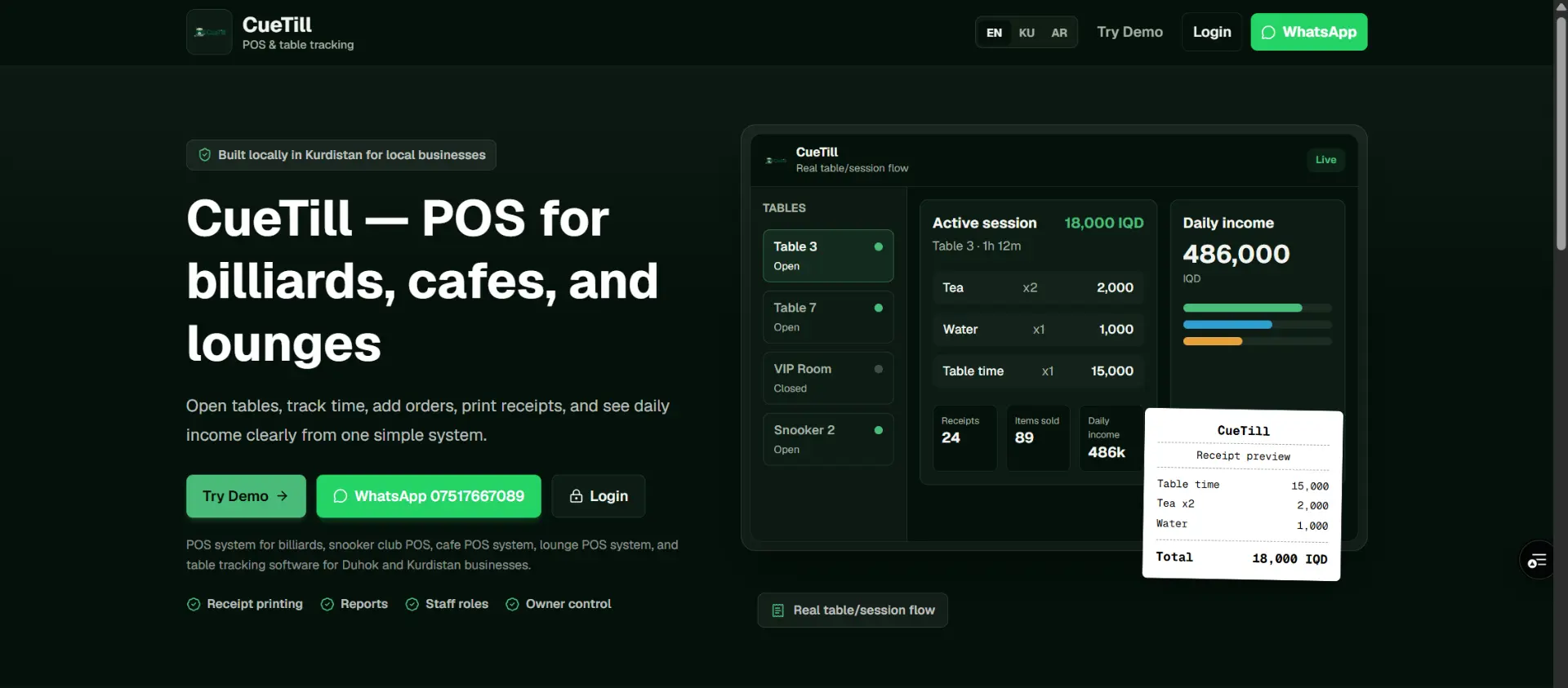
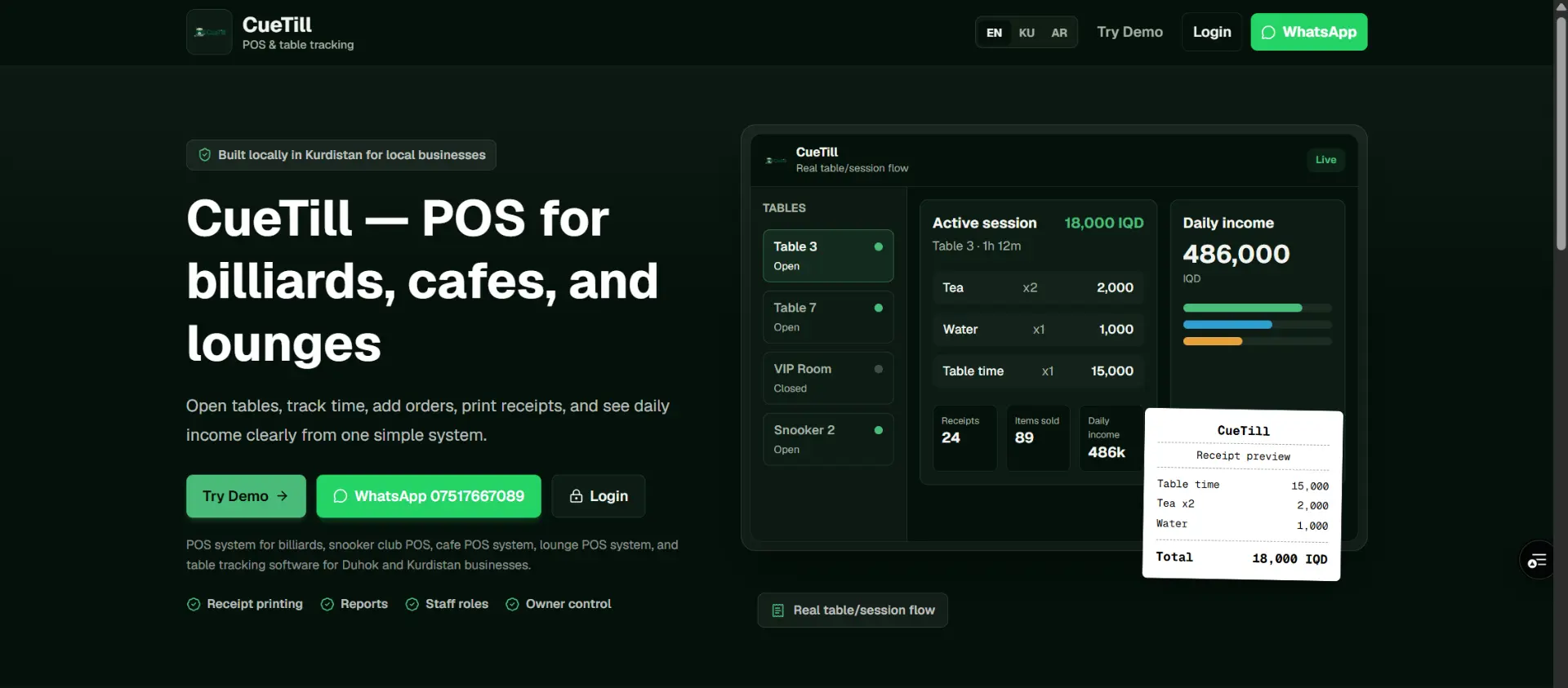
The system allows staff to open and close tables, add items to sessions, apply discounts, calculate totals, generate receipts, and track payments. Business owners can manage their items, monitor reports, and understand how the business is performing over time.
It was designed especially for businesses like cafés, lounges, billiard halls, and similar places where table sessions and item orders happen together.
Key features
CueTill includes:
Table opening and closing
Active session tracking
Item and order management
Receipt generation
Payment tracking
Sales reports
Staff roles
Business settings
Multi-tenant business structure
Subscription-based plans
Clean dashboard experience
The system is built to be simple enough for staff to use every day, but powerful enough for owners to trust for their business operations.
Technical approach
CueTill was built using a modern web stack with a focus on speed, reliability, and future scalability.
The platform uses Next.js for the application, Neon PostgreSQL for the database, and Vercel for deployment. The system is structured as a multi-tenant SaaS, meaning each business has its own isolated data and settings.
This makes CueTill more than just one custom POS. It is built as a platform that can support multiple businesses over time.
What I learned
Building CueTill taught me that business software is not just about features. It is about understanding how people actually work.
A cashier does not want a confusing system. An owner does not want unnecessary complexity. Staff need speed. Managers need control. The system has to respect the daily pressure of the business.
That is why the user experience matters as much as the backend logic.
Final result
CueTill became a practical POS and table management platform built for real local business needs. It combines table tracking, item management, receipts, reports, roles, and business subscriptions into one clean system.
This project represents the type of software I enjoy building most: systems that solve real operational problems for real businesses.
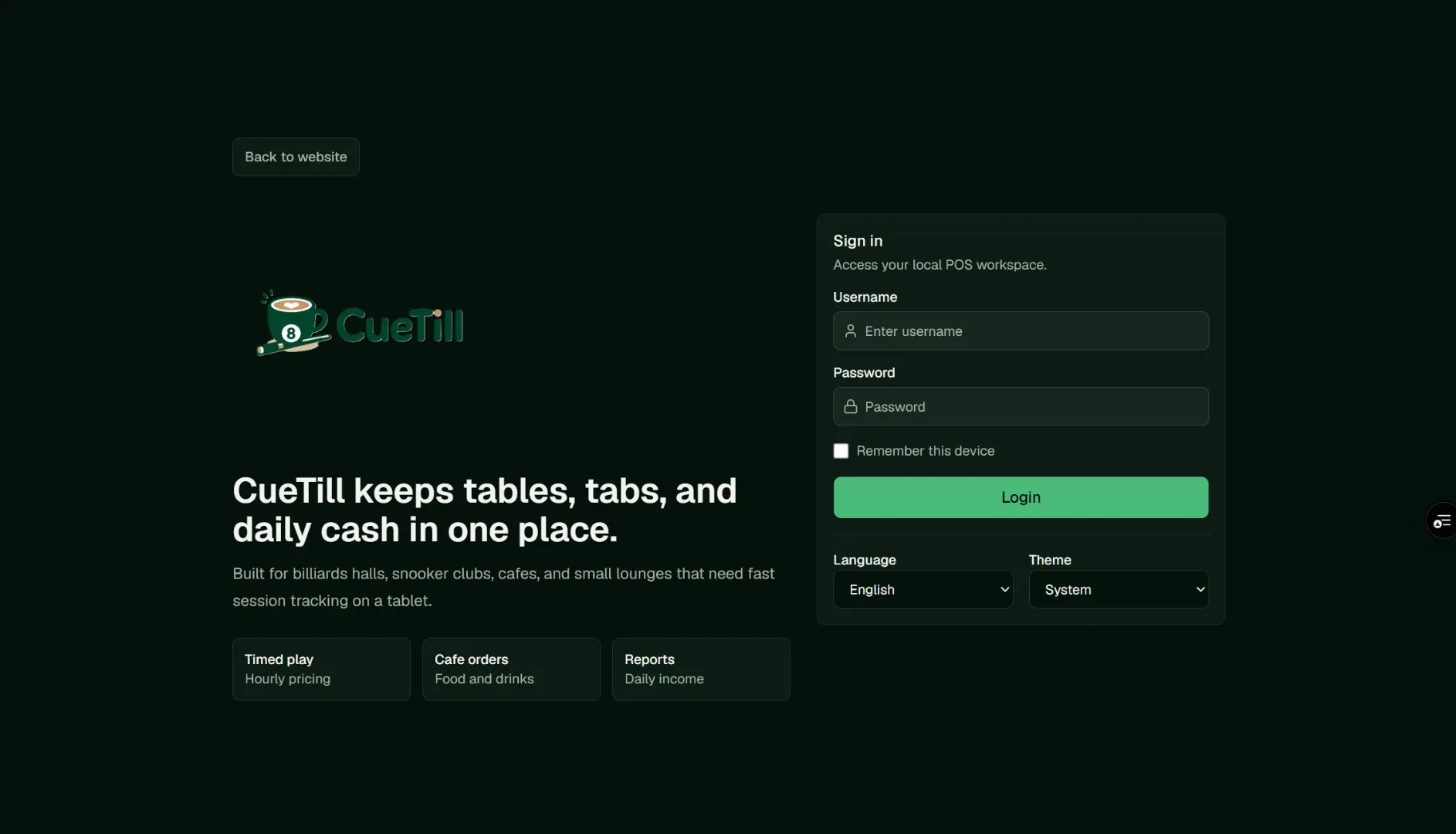
System Preview: